UNTIL DEATH, ALL DEFEAT IS PSYCHOLOGICAL
03 31 2026. 14: 06: 51: 415
How Manufacturing Discipline Becomes Military Readiness
Published by Veptos.com
May 2026
ABSTRACT
The discipline that has made automotive manufacturing the most efficient production system on earth is now the most underutilized resource in defense refurbishment. Veptos applies automotive principles, including takt time, repeatable work cells, standardized quality gates, and throughput thinking, to military vehicle recapitalization. The result is not simply faster work. It is a fundamentally different class of industrial certainty that the defense enterprise urgently needs.
The automotive industry did not achieve precision at scale by
working harder. It achieved it by designing systems that make
precision the expected outcome rather than the exceptional
one.
I. The Manufacturing Gap in Defense Refurbishment
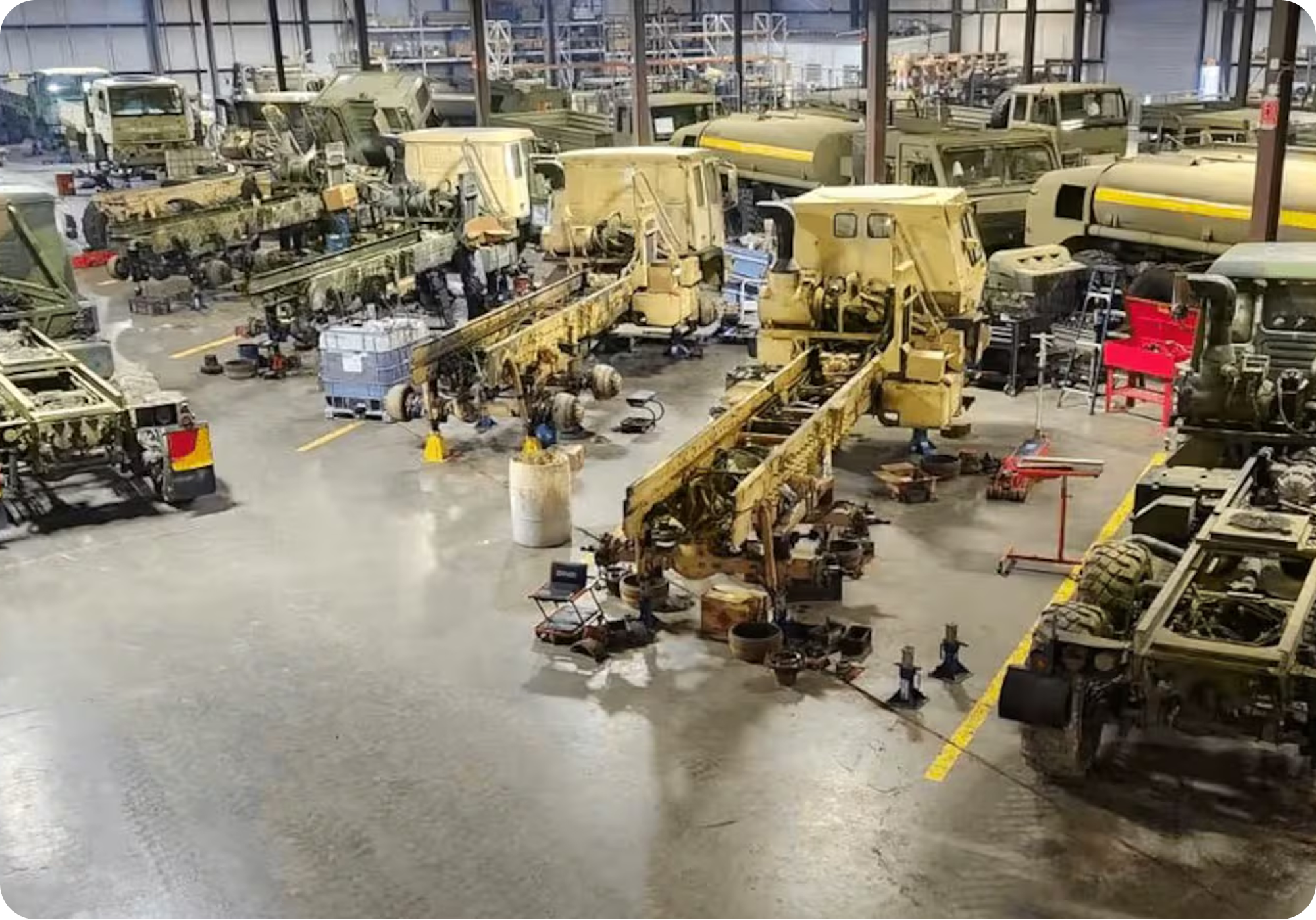
For decades, the defense industrial base has treated vehicle refurbishment as a skilled-trades problem: hire experienced mechanics, give them space and time, and eventually return working vehicles. The approach is artisanal by nature. Output is variable. Timelines drift. Quality depends on the individual, not the system.
Meanwhile, the commercial automotive industry solved these exact problems, and did so at enormous scale. Automotive manufacturers routinely disassemble, inspect, clean, rebuild, and validate complex mechanical systems with repeatable precision across thousands of units per month. The methods are not secret. They are structured.
II. What Automotive Manufacturing Actually Means
Automotive discipline is built on a set of interlocking principles that collectively eliminate variability and maximize output. Applied to military vehicle refurbishment, these include:
An industrial partner that cannot predict its own output rate
cannot credibly serve as a strategic production resource. One
that operates with production logic can.
III. Veptos: Where These Disciplines Meet Defense
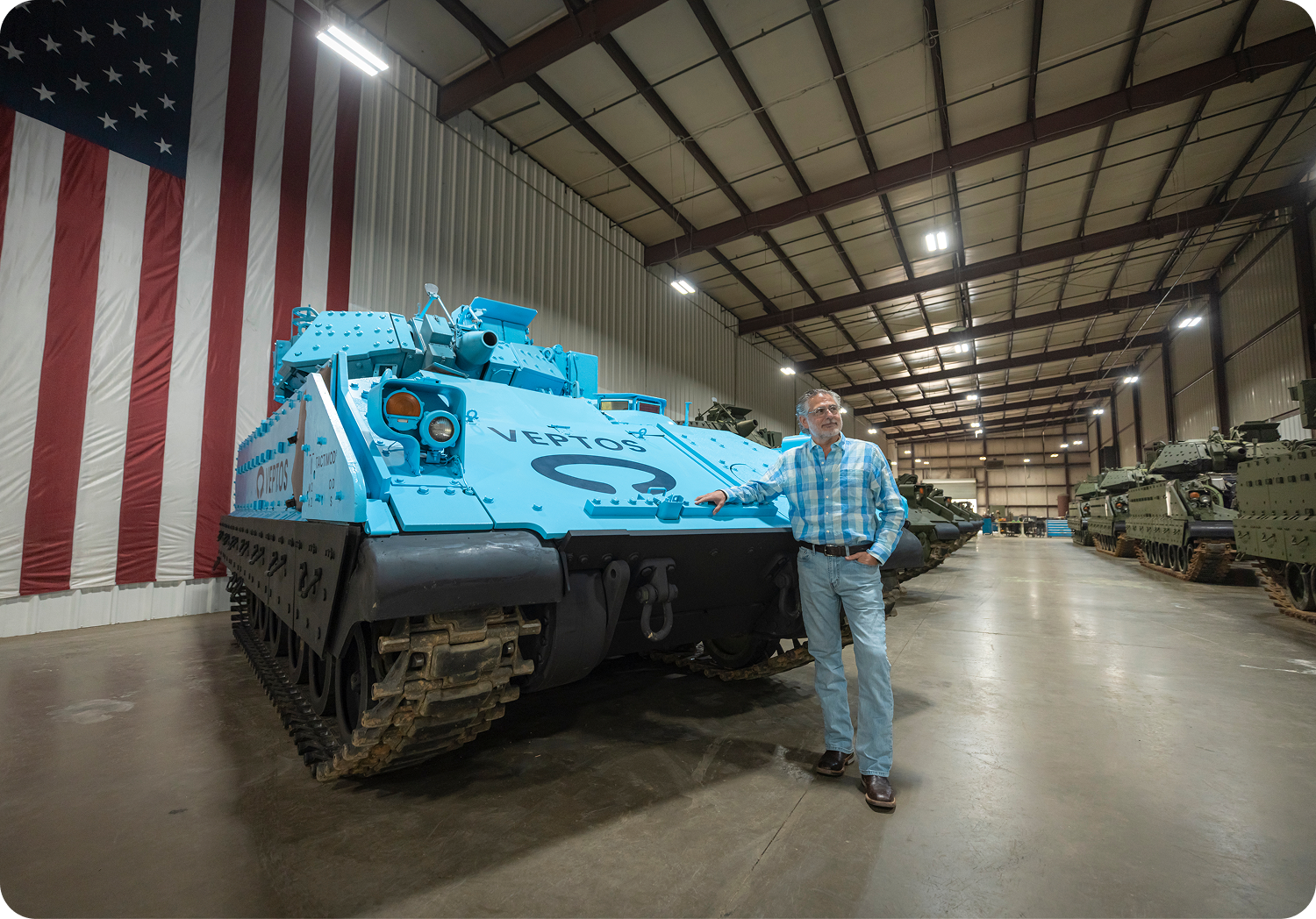
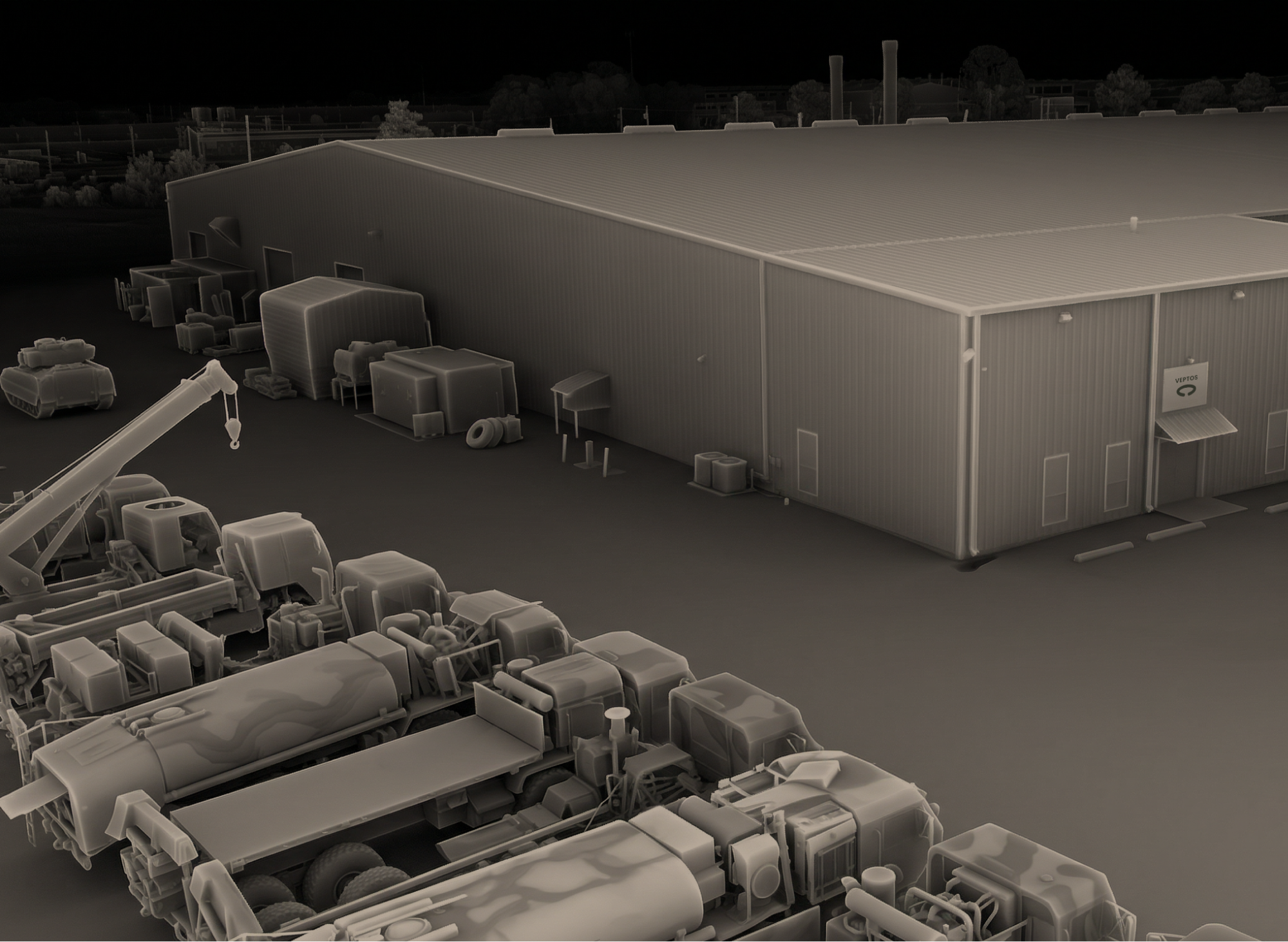
Veptos was designed from the beginning to apply this manufacturing logic to military vehicle recapitalization. The New Boston, Texas facility operates not as a traditional repair depot but as a production environment. Vehicles enter a controlled process. They do not exit until they have passed defined quality gates at every stage.
A customer does not receive a vehicle that someone believes is ready. They receive a vehicle that has been validated against measurable standards, including cleaning verification, mechanical tolerance confirmation, and systems functional testing, at each stage of the process. The production logic also enables surge capacity: because the process is standardized and cell-based, workforce expansion maps directly to throughput increase.
IV. The Strategic Significance
Modern conflict does not pause for production problems. Allies need vehicles. Partners need support. The industrial base must be capable of responding at operational tempo, not administrative tempo. Veptos brings the rigor of one of the world's most demanding manufacturing environments to the problem of military vehicle readiness.
The question is not whether automotive manufacturing
principles work. It is whether they will be applied to military
vehicle recapitalization before the demand crisis arrives, or in
response to it.
V. Conclusion
The defense enterprise has long acknowledged that manufacturing discipline matters. It has been slower to act on that acknowledgment in the domain of vehicle refurbishment. Veptos has made that transition, building a production system rather than a repair shop, and the difference is measurable in throughput, quality consistency, and delivery reliability.
FOR IMMEDIATE RELEASE OR LOOKING TO PITCH AN INTERVIEW INSTEAD?
CONTACT OUR PRESS TEAM.
.png)
.png)
.png)
.png)
.png)



.png)