UNTIL DEATH, ALL DEFEAT IS PSYCHOLOGICAL
03 31 2026. 14: 06: 51: 415
The Strategic Need for Rapid, Scalable Manufacturing
in the U.S. Defense Industrial Base
Published by Veptos.com
May 2026
ABSTRACT
This paper examines a defining strategic vulnerability in the United States defense posture: the erosion of the nation's capacity to manufacture, refurbish, and field ground combat systems at the speed and scale that modern conflict demands. While decades of investment in precision technologies and next-generation platforms have produced weapons of remarkable sophistication, they have done so at the quiet cost of the industrial foundations that once made America the most formidable military power the world had ever seen.
The men and women who built Sherman tanks in Detroit, half-tracks in Flint, and armored vehicles across the American heartland did more than win a war. They forged a manufacturing tradition of unmatched quality and resilience. As Arthur Herman recounts in Freedom's Forge, when President Roosevelt called on General Motors president William "Big Bill" Knudsen in 1940 to lead America's industrial mobilization, Knudsen answered without hesitation, because it was his patriotic duty. In four short years, the industrial might that Knudsen and his counterparts unleashed transformed America's military from what Herman described as a hollow shell into the most powerful fighting force the world had ever seen. A.J. Baime's Arsenal of Democracy captures the human dimension of that transformation: the workers who flooded into places like Ford's Willow Run plant, the managers who drove impossible production schedules, and the conviction, proven correct, that American industry, properly organized and properly motivated, could outbuild any adversary on earth.
The combat vehicles that emerged from that era of industrial excellence, and from the decades of American manufacturing achievement that followed, were built to last. Many remain mechanically sound, structurally proven, and worthy of new life through thoughtful modernization. This paper argues that their refurbishment is not a secondary industrial function. It is a primary pillar of national defense readiness. It further argues that the United States must transition toward a distributed, modular, and digitally enabled manufacturing model capable of producing new systems rapidly, sustaining legacy platforms at scale, and surging industrial output in times of crisis, honoring the legacy of those who built them by ensuring their work continues to serve the nation.
Strength is not only measured in the precision of our weapons.
It is measured in our capacity to field them, sustain them, and
replace them faster than any adversary can adapt.
I. The Strategic Problem: Capability Without Capacity
For more than two decades, the United States defense establishment has organized itself around a philosophy of technological supremacy. Investment flowed toward precision-guided munitions, stealth platforms, network-centric warfare, and advanced sensor systems. This was not misguided. These capabilities have proven decisive in numerous engagements and continue to represent genuine military advantages. But in the relentless pursuit of better weapons, the nation allowed something equally essential to atrophy: the ability to produce weapons in meaningful volume, at meaningful speed, and to sustain them over the course of a protracted conflict.
Modern near-peer competition does not unfold in isolated engagements. It demands large volumes of combat vehicles available for rapid deployment, the capacity to replace battlefield losses faster than they accumulate, continuous modernization cycles that keep fielded platforms competitive, and the logistical depth to support multi-theater operations simultaneously. A force that cannot replace or sustain its equipment quickly becomes strategically constrained, regardless of how advanced that equipment may be at the moment of deployment.
The lessons of recent history are instructive. The conflict in Ukraine has demonstrated with sobering clarity that industrial capacity, specifically the unglamorous ability to produce, repair, and field armored vehicles at scale, can determine the trajectory of a war as decisively as any single weapons system. Nations that can sustain production under pressure hold a strategic advantage that no precision weapon alone can confer. The United States must absorb this lesson before it is tested in circumstances that leave no margin for error.
II. The Legacy Worth Honoring and Refurbishing
There is a tendency in defense policy circles to frame the refurbishment of legacy platforms as a concession, a fallback position adopted when new procurement is too slow or too expensive. This framing fundamentally misunderstands both the quality of what American workers built and the strategic logic of preservation over replacement.
The story of American defense manufacturing is, at its core, a story of people. William "Big Bill" Knudsen, the Danish immigrant who rose from the shop floor to lead General Motors and who then left that post at Roosevelt's call to lead the nation's wartime industrial mobilization, embodied a philosophy that defined an era. As Arthur Herman documents in Freedom's Forge, Knudsen believed that progress required curiosity over fear, that leadership meant listening rather than shouting, and that the discipline of mass production, making more rather than fewer to drive down cost and drive up quality, was itself a form of national power. It was Knudsen who catalyzed what Herman calls a "flexible mass production": a manufacturing process built for constant modification and change, capable of pivoting from automobiles to aircraft, from peacetime commerce to wartime necessity, without losing a step.
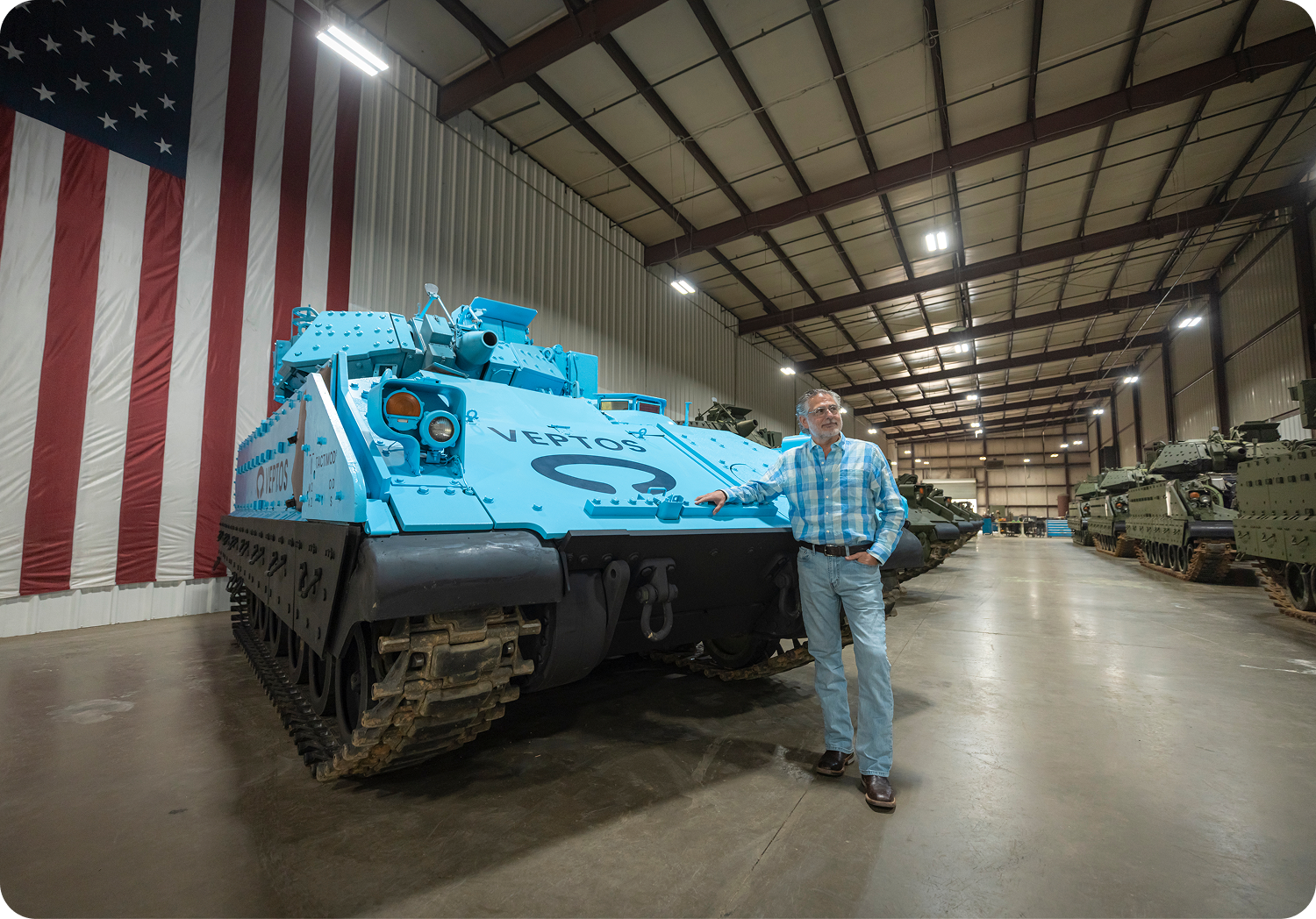
The workers who answered that call, and the generations of skilled tradespeople who followed them through the Cold War and beyond, brought to their work the same standard. The combat vehicles they produced, from the armored personnel carriers of the Cold War era to the infantry fighting vehicles of the 1980s and 1990s, were engineered with structural integrity and mechanical durability that has, in many cases, outlasted the geopolitical assumptions under which they were designed. These are not obsolete relics. They are proven chassis, tested in field conditions around the world, with the structural bone and mechanical soundness to serve as the foundation for modern upgrades.
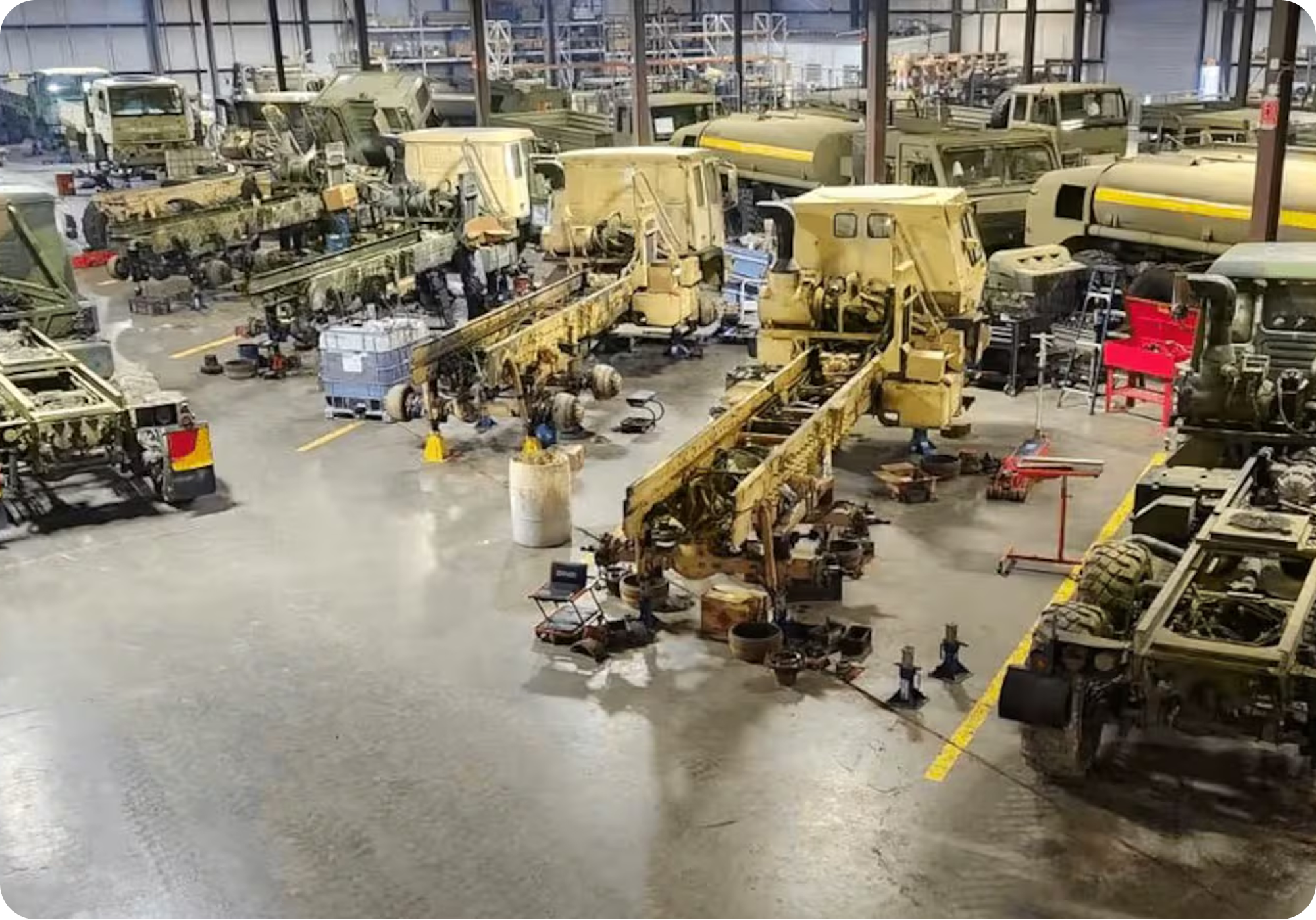
Refurbishment at scale allows the nation to rebuild those platforms, installing modern fire control systems, advanced armor packages, digital communications architecture, and contemporary powertrains, at a fraction of the cost and timeline required for new production. It is the fastest path to generating combat-ready mass. It honors the work of the Americans who built these vehicles by refusing to treat their labor as disposable. And it preserves institutional knowledge within the defense industrial base that, once lost, cannot easily be recovered.
The Americans who built these vehicles built them to last. Our
obligation is to ensure that their work continues to serve the n
ation, and that the skills required to sustain it are not allowed
to disappear.
A.J. Baime's Arsenal of Democracy reminds us that the transformation of American industry during World War II was not merely an organizational triumph. It was a human one. The tens of thousands of workers who streamed into Willow Run and plants like it across the country came from farms and small towns, from communities that had never seen a production line, and within months they were building some of the most complex machines ever manufactured. That capacity, to mobilize human talent, to train rapidly, to produce with quality under pressure, is not a relic of a vanished era. It is a renewable inheritance, available to any generation willing to invest in it. The refurbishment of today's legacy vehicles is precisely that investment: a decision to honor the work of the past by making it relevant to the future.
Foreign Military Sales and coalition support requirements further amplify the case. Allied nations frequently require proven, supportable platforms on compressed timelines. A well-resourced refurbishment pipeline can meet those requirements in ways that new-build programs simply cannot, generating strategic goodwill, strengthening alliances, and extending American influence at comparatively modest cost.
III. Supporting Domestic and Global Security Simultaneously
The defense industrial base does not serve a single master. It must simultaneously support domestic readiness requirements, including National Guard formations, law enforcement support missions, and critical infrastructure protection, while sustaining America's global commitments to forward deterrence, allied equipping, and coalition force generation. These are not competing demands. They are complementary ones, and they argue for exactly the kind of high-volume, flexible manufacturing capacity that a modernized refurbishment and production model would provide.
Domestically, the availability of combat-ready ground vehicles enables rapid response to emergencies, supports civil authorities during periods of disruption, and ensures that the nation's reserve component forces are equipped for any contingency. Globally, America's credibility as a security guarantor depends on its demonstrated ability to equip partners and surge support to allies under stress. Both imperatives require the same underlying capability: a defense industrial base that can produce and refurbish platforms in volume, on demand, without being held hostage to a single centralized facility or a bespoke production line serving a single program.
IV. The Limits of the Legacy Prime Contractor Model
The traditional defense prime contractor model served the United States well during an era defined by long development timelines, stable threat environments, and predictable production requirements. Large, centralized facilities executing multi-decade programs delivered systems of extraordinary capability. But those same characteristics, centralization, long cycles, bespoke infrastructure, and limited scalability, represent serious liabilities in the current strategic environment.
When production must surge rapidly in response to an emerging crisis, a single large facility with a fixed workforce and specialized tooling cannot simply double or triple output. When requirements change faster than a program can adapt, rigid development cycles become strategic liabilities. When a production line serves only one platform variant, the industrial base loses the flexibility to respond to the full spectrum of operational demand. The prime contractor model is efficient for executing a defined program. It is poorly suited for the kind of industrial agility that modern conflict demands.
This is not an argument against prime contractors or the expertise they embody. It is an argument for supplementing their capabilities with a different kind of industrial architecture, one built around distribution, modularity, and digital enablement rather than centralization, bespoke design, and analog process management. Knudsen understood this intuitively: when mobilizing American industry in 1940, he did not consolidate production into a single massive enterprise. He distributed it, drawing on the full depth of American manufacturing geography, from the Great Lakes to the Gulf Coast, weaving together hundreds of companies into a single, adaptive productive force. That model is as relevant today as it was then.
V. A New Model: Distributed, Modular, Digitally Enabled Manufacturing
The manufacturing architecture required to meet America's defense needs in the coming decades must be built on four foundational principles: distribution, modularity, scalability, and digital integration.
Distribution
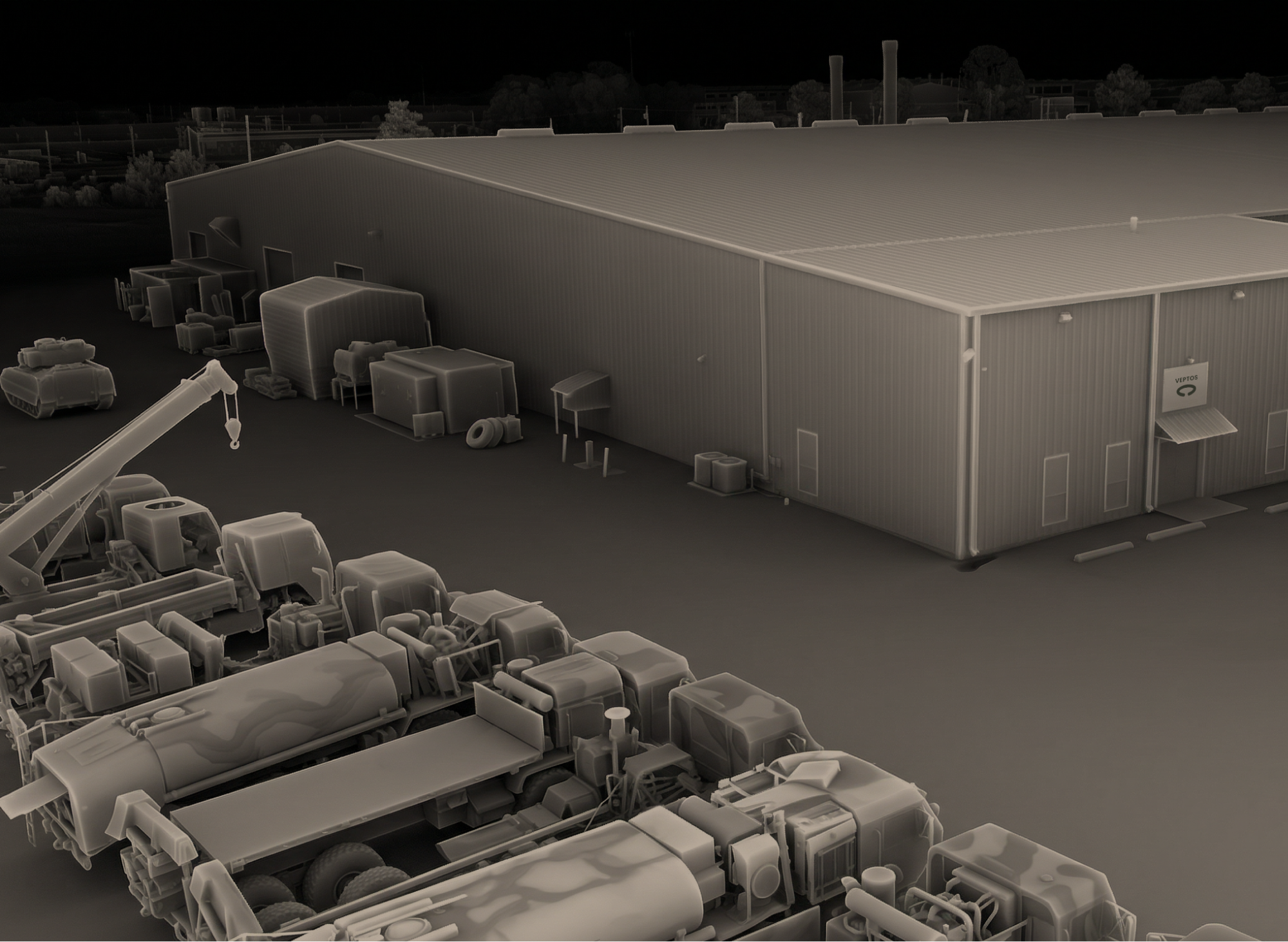
Production capacity must be spread across multiple geographic hubs rather than concentrated in a single facility. States like Michigan, home to one of the world's great automotive manufacturing traditions, and Texas, with its deep roots in heavy vehicle and defense operations, represent natural anchors for a distributed production network. Geographic diversification reduces single-point failure risk, draws on established regional workforces, and ensures that no single event can neutralize the nation's production capacity.
Modularity
Modern combat vehicles should be designed and produced around open, modular architectures that enable subsystem replacement without full platform redesign. A modular approach allows individual components, including powertrains, weapons systems, communications suites, and protection packages, to be upgraded independently, extending platform relevance across multiple technology generations without the cost and delay of new-build programs. It also enables multiple suppliers to compete at the subsystem level, driving down cost and driving up innovation.
Scalability
Production infrastructure must be designed to surge. This requires expandable workforce structures, replicable production cells, and facilities that can be adapted to increased throughput without requiring entirely new capital investment. A baseline workforce drawing on automotive and heavy industry talent pools in the Midwest and South could expand rapidly as requirements demand. Digital work instructions and cross-training protocols, the modern equivalent of the rapid onboarding techniques that filled Willow Run in months, accelerate this process and reduce the time required to bring new workers to full productivity.
Digital Integration
Digital twins, Model-Based Systems Engineering, and real-time Manufacturing Execution Systems transform production from a process managed through experience and intuition into one managed through data. Configuration control becomes precise. Quality assurance becomes systematic. Supply chain visibility becomes comprehensive. And the knowledge required to sustain a platform, knowledge that too often resides in the memory of a single experienced technician, becomes codified, transferable, and durable. Quality assurance based on systems such as IATF 16949 must become the standard. Companies whose leadership embrace these standards will always rise to the top. Digital integration is not a luxury for a modern defense manufacturer. It is a prerequisite for the kind of consistent, high-volume production that national security demands.
VI. Policy and Acquisition Reform
Rebuilding America's defense manufacturing capacity requires more than industrial investment. It requires a deliberate shift in the philosophy and practice of defense acquisition, from a model organized around individual programs to one organized around persistent production capacity.
Requirements should be written to prioritize production scalability alongside system performance, including a strategy to aggressively accelerate the involvement of non-traditional manufacturers with demonstrated production expertise. Modular subsystem contracting should be encouraged to drive competition and innovation below the platform level. Sustained investment in regional manufacturing hubs, with the workforce development infrastructure to support them, should be treated as a national security priority, not a discretionary economic development initiative.
The acquisition community must also resist the temptation to allow perfect to be the enemy of good. A refurbished platform, upgraded with modern systems and ready for deployment in twelve months, serves the national interest more effectively than a next-generation vehicle still in development three years from now. Speed of delivery is itself a form of capability, a lesson Knudsen grasped immediately when he told Washington that the nation's production challenge was not a question of will, but of organization and time.
VII. Conclusion: Production as Power
The United States built the greatest military force in human history not only through the genius of its engineers and the courage of its soldiers, but through the unmatched productive capacity of its workers. The men and women who manufactured the vehicles, weapons, and equipment that equipped America's forces, and those of its allies, across multiple generations of conflict deserve to have their contribution recognized in the most meaningful way possible: by ensuring that the industrial base they built continues to serve the nation, and that the platforms they produced continue to be worth sustaining.
Restoring the Arsenal of Democracy means more than rebuilding factories. It means rebuilding a philosophy, one that treats production capacity as a form of national power equal in importance to technological sophistication, that honors the durability of American-built platforms by investing in their continued relevance, and that ensures the United States can field combat-ready mass at the speed and scale that modern conflict demands. Knudsen knew this. Baime's account of Willow Run makes it visceral: the difference between winning and losing was not the quality of any single aircraft. It was the rate at which they came off the line. That truth has not changed.
Central to realizing this vision is the recognition that supplier selection is a strategic decision, not an administrative one. The industrial partners best positioned to meet the nation's refurbishment and modernization requirements are those with large volumes of verified past performance, companies that have demonstrated, across real programs and real deliveries, the ability to execute at scale, on schedule, and to standard. Track record is not bureaucratic box-checking. In defense manufacturing, it is the clearest predictor of whether capability will be present when it is needed most. Acquisition strategies that favor proven producers and that reward depth of past performance in source selection will yield faster results, lower risk, and more operationally ready platforms than those that do not.
The future of American defense is not innovation alone. It is innovation paired with production, better weapons, more of them, delivered faster, sustained longer, and supported by a workforce and an industrial base worthy of the nation they defend.
America does not only need more advanced weapons. It needs
mass, speed, and sustainment, and the industrial base to
deliver all three without apology and without delay.
Key References
Herman, Arthur. Freedom's Forge: How American Business Produced Victory in World War II. Random House, 2012.
Baime, A.J. The Arsenal of Democracy: FDR, Detroit, and an Epic Quest to Arm an America at War. Houghton Mifflin Harcourt, 2014.
FOR IMMEDIATE RELEASE OR LOOKING TO PITCH AN INTERVIEW INSTEAD?
CONTACT OUR PRESS TEAM.
.png)
.png)

.png)
.png)
.png)



.png)